
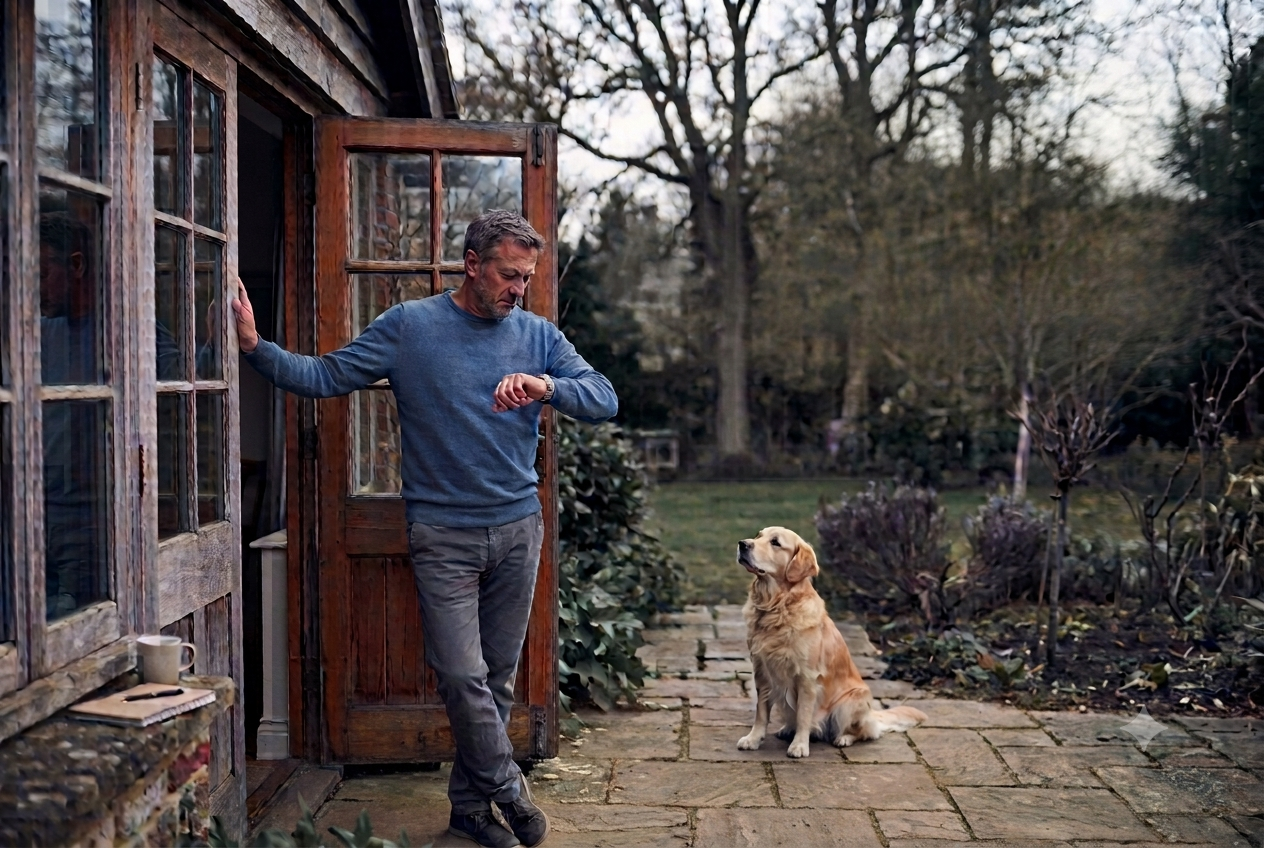
I know a man who still wears a watch every morning at exactly 8:15.
Not because he has somewhere to be. He retired three years ago. The office laptop is gone. The meetings stopped. Nobody waits for his emails anymore. And yet, every single morning, he finishes his tea at the same time, walks to the front door, and stands there for a few seconds — as if his body is still waiting for a reason to leave. Then he quietly sits back down. Nothing dramatic happened when he retired. He didn’t lose money.
He lost the place where he felt needed.
That’s the part almost nobody talks about when they romanticize early retirement. And it’s the part I keep noticing, again and again, in people who seemed completely fine on paper.
The internet is full of early retirement content. Spreadsheets. Safe withdrawal rates. Passive income streams. “I retired at 34 and you can too.” The FIRE movement has its own subreddits, podcasts, and influencers — and honestly, the math often checks out. But here’s what nobody’s telling you:
Early retirement isn’t just a financial decision. It’s a psychological one. And that part? Most people get it completely wrong.
A Question Worth Sitting With
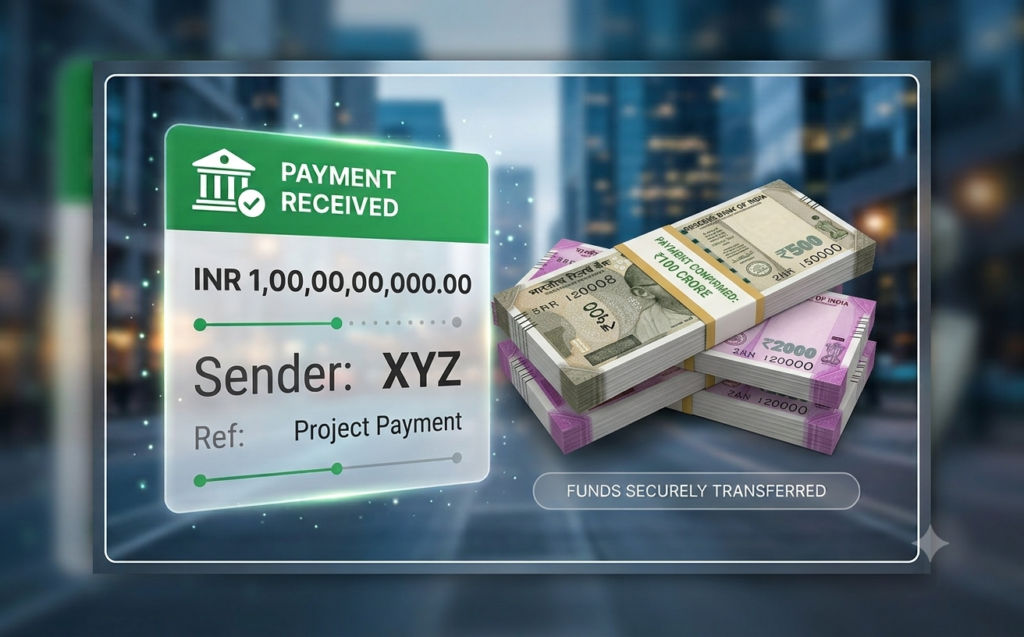
Imagine someone transfers ₹100 crore into your bank account tomorrow.
Would you still wake up early? Would you still be curious enough to learn something new? Would you still enjoy solving difficult problems? Would you still want your phone to ring with someone saying, “Can you help me with this?”
If your answer is yes, then maybe money was never the real reason you worked. Maybe work was giving you something money never could.
If your answer is no, don’t rush to conclude that you hate work. Maybe early retirement isn’t the dream — it’s the escape plan.
That thought made me pause. So I asked myself one uncomfortable question: What exactly am I trying to escape from? Is it work itself? Or is it the constant pressure, endless meetings, unrealistic expectations, and a life that leaves little room to breathe? Because those are problems retirement might hide — but not necessarily solve.
The more I thought about it, the more I realized something. When people dream about early retirement, they usually talk about everything they’ll finally stop doing. No more alarms. No more deadlines. No more meetings. But almost nobody talks about what they might stop being. Not productive. Not successful. Not busy. Needed.
Then another thought crossed my mind. I started thinking about one of the happiest days I’d ever had because of work. Not payday. Not a promotion. Just a day that has stayed with me. Maybe it was the time someone trusted me with a difficult problem. Maybe a client sincerely thanked me. Maybe someone said, “I couldn’t have done this without you.”
When I looked back, I realized those moments weren’t memorable because of the money. They were memorable because, for a brief moment, I felt useful. I felt trusted. I felt needed.
And that’s when another uncomfortable thought hit me: what if the biggest thing we lose when we retire early isn’t our salary — what if it’s the feeling that someone, somewhere, still needs us?.
Your Body Notices Before You Do
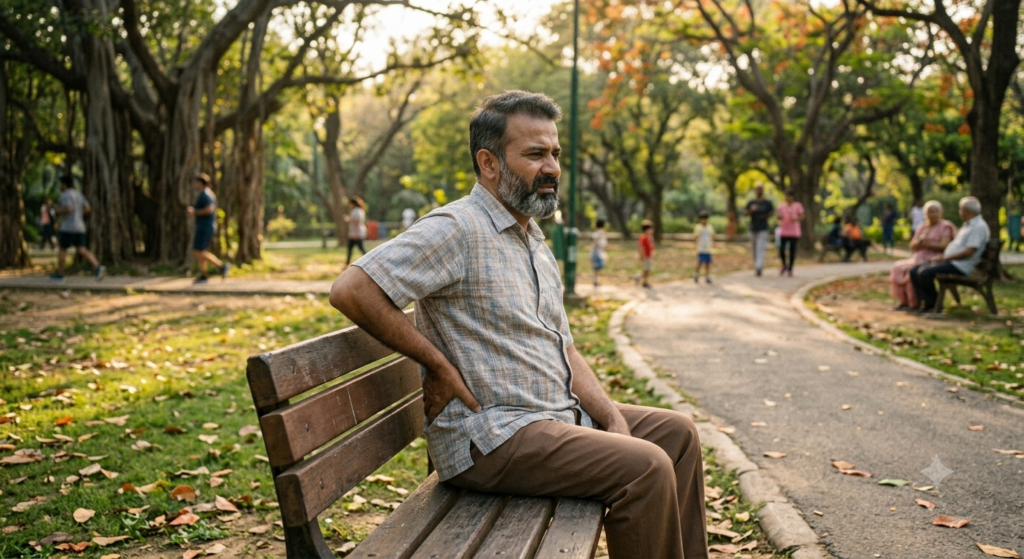
I’ve watched several people retire who were genuinely healthy. Not “okay for their age” — people who exercised regularly, ate well, had zero major health issues, and could outwork colleagues half their age.
Then they stopped working.
Within a year, something shifted. The back that was fine for decades suddenly hurt. Blood pressure crept up out of nowhere. The energy they had at 57 was gone by 61. Doctor visits doubled.
I’ve seen this happen more than once, and it made me wonder — is this really just age catching up? Or is it something quieter, something we don’t talk about?
Work isn’t just draining you. It’s holding you together.
The routine of waking up with a reason. The mental load of solving problems. Take all of that away overnight, and the body doesn’t experience it as rest. It experiences it as loss.
Being needed isn’t separate from health. Sometimes, it is health. Which is exactly why I’ve decided I don’t want this version of retirement for myself — I want to work well into my 80s, not because I have to, but because the work I do is part of who I am, and I’m not interested in retiring from myself.
But health is only the first thing that quietly unravels. The second is everything around you.
It’s Not Just Your Health. It’s Your Whole World
Salary is honestly the smallest thing you lose when you stop working. What actually disappears is the colleague who challenges your thinking, the client who trusts only you, the simple “can I get your take on this?” It fades quietly, not all at once. Until one day you realize nobody’s asking anymore. Then you go home. And you stay home.
Your family’s schedule didn’t change just because yours did. Everyone’s running on the same timetable they always were — except you. The family doesn’t get more of you. They get a different version of you — one with nowhere left to put itself.
This is what makes me ask a harder question — not about routine, but about identity itself.
The Future Version of You You’ll Never Meet

When people plan for early retirement, they calculate one thing very carefully. Money.
“Will my investments last?”
“Will I have enough?”
But there’s another cost that doesn’t fit into a spreadsheet. The life you’ll never get to live.
Imagine you retire at 42. The first few years are exactly how you imagined. You travel. You read. You finally slow down. It feels like freedom. But life doesn’t stop creating opportunities just because you’ve stepped away. At 48, maybe you would have started something that genuinely helped people. At 53, maybe you would have led a team that changed your company. At 56, maybe you would have discovered a problem so fascinating that you spent years trying to solve it.
You’ll never know. Not because you weren’t capable. But because you were no longer in the places where those opportunities could find you.
Now imagine meeting your old colleagues fifteen years later. Some built businesses. Some wrote books. Some failed, started again, and eventually found something bigger than they had imagined. You smile while listening to their stories. But somewhere in the back of your mind, one question quietly appears. “Could that have been me?”
Maybe. Maybe not. That’s not the point. The point is that by leaving the game early, you also leave behind every future version of yourself that could only exist by staying in it.
Retirement doesn’t only close your calendar. Sometimes, it closes doors you’ll never know existed.
And once you start thinking about doors closing, another question naturally follows — because most people assume financial independence and early retirement are just two names for the same finish line.
So Wait — Aren’t Financial Independence and Early Retirement the Same Thing?
Fair question. If Financial Independence is the goal, doesn’t retirement just… follow?
Not really. Here’s the difference:
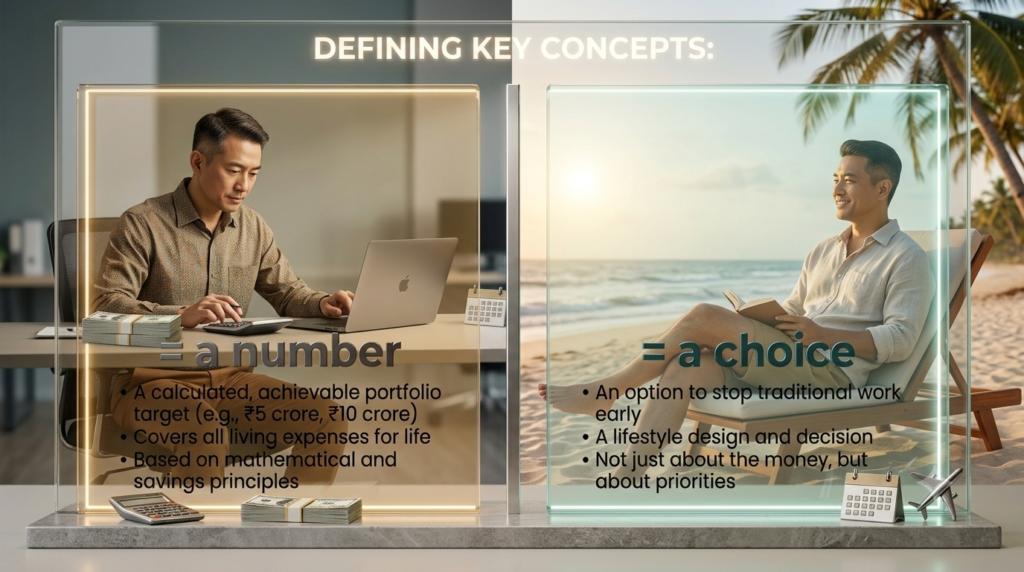
Financial Independence is a number. It means your money can support you without you needing to work. That’s it — just a financial state. Early Retirement is a choice you make after reaching that number — to stop working completely. Financial Independence gives you the option. Early Retirement is whether you take it.
Some people hit FI and keep working — not because they have to, but because they want to. A founder whose business already secured his future might keep building new things simply because he enjoys it. He’s FI. He’s not retired. Others hit FI and stop immediately. That’s the classic FIRE path.
So yes — you usually need Financial Independence before you can even consider Early Retirement . But reaching Financial Independence doesn’t mean retirement is the automatic next step. It just means, for the first time, you actually get to choose.
Maybe Real Freedom Looks Different

What if financial freedom isn’t the freedom to stop working — but the freedom to finally choose your work?
When money stops being your biggest worry, you stop chasing paychecks and start building what you’ve always wanted: mentoring, teaching, writing, consulting, solving problems simply because they excite you, without asking “what if this doesn’t make money?”
Real freedom isn’t doing nothing. It’s choosing what feels meaningful — an escape not from work, but from work that no longer feels like us.
Which brings everything back to one place?
So What’s the Real Question?
Maybe it isn’t “Do I have enough money to retire?” Maybe it’s “Do I have work that still gives my life meaning?”
If yes — don’t walk away just because you can. Shape it instead. Work fewer hours, take fewer meetings, slow down if you need to. But don’t let go of something that still makes you feel alive.
If no — don’t assume retirement is the answer. Maybe it’s different work. A different role. A different company. Or finally building the thing you’ve wanted to build for years.
Sometimes we don’t want to stop working. We just want to stop doing work that no longer feels like us. Because human beings don’t only need rest. They need a reason to wake up. Financial independence gives you a choice. Meaning gives you a reason.
So before you retire early, ask yourself one last question:
“Am I trying to escape work… or am I trying to escape the wrong work?”
The answer might change your retirement plan completely. People spend decades planning how to retire. Very few spend time planning who they’ll become after. Maybe that’s the more important plan.
Your Turn
Would you still choose to work if money was never a problem? Not because you had to — because you wanted to.
I’d genuinely love to know your answer. Drop it in the comments.
Because maybe the real dream was never retiring early. Maybe it was finally having the freedom to spend your life doing work that feels worth showing up for.